Cassina's distinction in the Italian furniture canon is proportion. The brand's most significant pieces — the LC2 by Le Corbusier, the Maralunga by Vico Magistretti, the Cab chair by Mario Bellini — hold their authority not primarily because of the materials they are made from, but because of the relationships between their dimensions. The seat height, the back angle, the arm-to-seat ratio. The way the piece sits in space and commands it without effort.
This is what collectors of Cassina are actually buying. Not the fabric. Not the foam. The proportional intelligence — distilled from decades of testing and refinement by designers who understood that furniture does not occupy a room passively. It either holds the room or it yields to it.
In Bangkok, Cassina pieces are available through CHANINTR and other premium importers. The prices are significant — the import chain, duties, and showroom margins apply — but the design pedigree is real. If you want a specific Cassina piece, there is no substitute for the original.
WHAT CASSINA TEACHES US ABOUT DINING TABLES
The lesson Cassina's dining table range offers Bangkok buyers is not which table to buy. It is how to think about proportional authority — why certain tables look resolved and others look approximate.
A Cassina dining table occupies its space with certainty because its dimensions are intentional to a degree that most catalogue furniture does not achieve. The leg position is calculated to allow maximum seating without obstruction at corners. The top thickness is set to the visual weight appropriate for the table's length. The height is within a millimetre of the ergonomic optimum for the chair range it was designed to accompany.
These calibrations are not proprietary Cassina knowledge. They are applied design principles. The difference is that Cassina applies them — and many catalogue brands do not, because exact calibration adds development cost that does not justify itself at mass market price points.
A custom-built dining table built to these same calibrations — where the leg position is calculated for your specific seating count, the top thickness is set to your room's scale, and the height is confirmed against the chairs you own — achieves the same proportional authority without the brand premium.
THE MARALUNGA PRINCIPLE
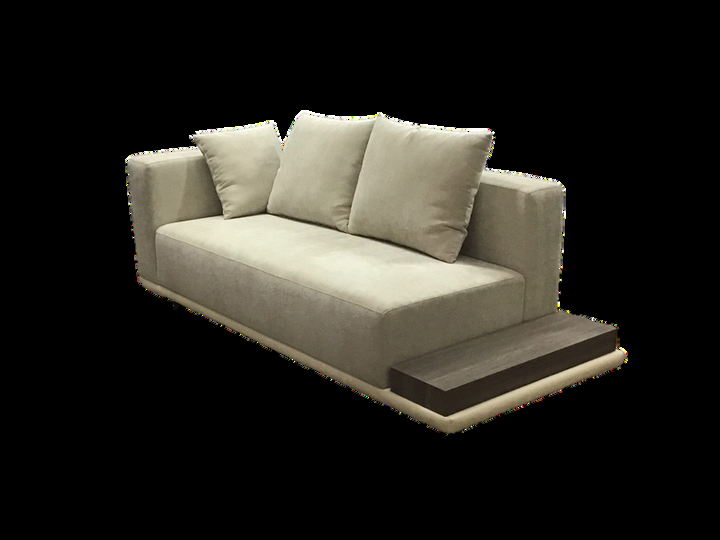
Vico Magistretti's Maralunga sofa — Cassina's best-known piece — has an adjustable headrest that raises with a single hand gesture. This is often described as the sofa's defining feature. It is not. The defining feature is the back cushion profile, which is specifically calibrated to provide lumbar support at the seated position most people actually adopt — slightly reclined, with the base of the spine supported rather than the mid-back.
The adjustable headrest is a consequence of this back geometry. Because Magistretti set the back at the correct angle for human anatomy, the head needed to be adjustable to accommodate different body heights. The mechanism is the solution, not the concept.
This principle applies to every sofa conversation we have: the seat depth, the back angle, and the relationship between them are not aesthetic choices. They are the design. Everything else is detail. This is what Cassina understood in 1973, and what Bangkok's premium custom furniture market is still learning to apply.
"PROPORTIONAL AUTHORITY IS NOT A BRAND ATTRIBUTE. IT IS A DESIGN STANDARD. ANY MAKER CAN ACHIEVE IT — IF THEY ARE WILLING TO DO THE WORK."
WHY CASSINA PRICING IN BANGKOK IS WHAT IT IS
A Cassina Maralunga sofa at Bangkok retail pricing runs from ฿450,000 to ฿700,000 depending on fabric selection and configuration. This price reflects: the brand's licencing structure (Cassina pays royalties to the designers' estates), the Italian manufacturing premium, import duties, and the distribution chain to Bangkok.
None of these costs add fabric quality, structural quality, or foam quality. They represent the cost of brand authenticity and design heritage — which is a real and legitimate value. The Maralunga is an authentic object. You are buying a specific piece of design history.
For Bangkok buyers who want that history, the price is what it is and the value is clear. For buyers who want the proportional intelligence, the seat geometry, the build quality — applied to a piece designed specifically for their room and their body — custom furniture is the answer. The design thinking costs the same to apply. Only the brand does not come with it.
WHAT THIS MEANS FOR YOUR ROOM
The most useful takeaway from Cassina is not which piece to buy. It is what to look for. Before commissioning any custom piece, the proportional questions matter: Is the seat depth right for the people using it? Is the dining table height exactly right for the chairs? Is the headboard height set to the room, not to a catalogue standard?
If those questions are answered correctly, the piece will hold the room. If they are not — if the designer or maker is not asking them — the result will look approximate, regardless of material quality or price. Cassina's legacy is the reminder that proportion is not decoration. It is the work.
COMMISSION SOMETHING PROPORTIONALLY RIGHT
Every Space K piece begins with the proportional questions — and builds from the answers. From ฿80,000.